
Function sheet
Gala Dinner & Leadership Awards
- Date
- Thu, Oct 15 · 7:00 PM
- Location
- Aspenglow Ballroom
- Guaranteed
- 620
- Set
- 62 rounds of 10
$ why pholeo
A conference planner, on a Spec Sync call
Registration, the attendee app and the project tracker each do one job well. None of them hold the specs, the rooms, the money and the show floor together. That job has been yours, by hand, in a workbook only you can read. Pholeo is the event logistics platform: one record of the event that every sheet, BEO, budget line and phone on the floor is a view of.
Where it breaks
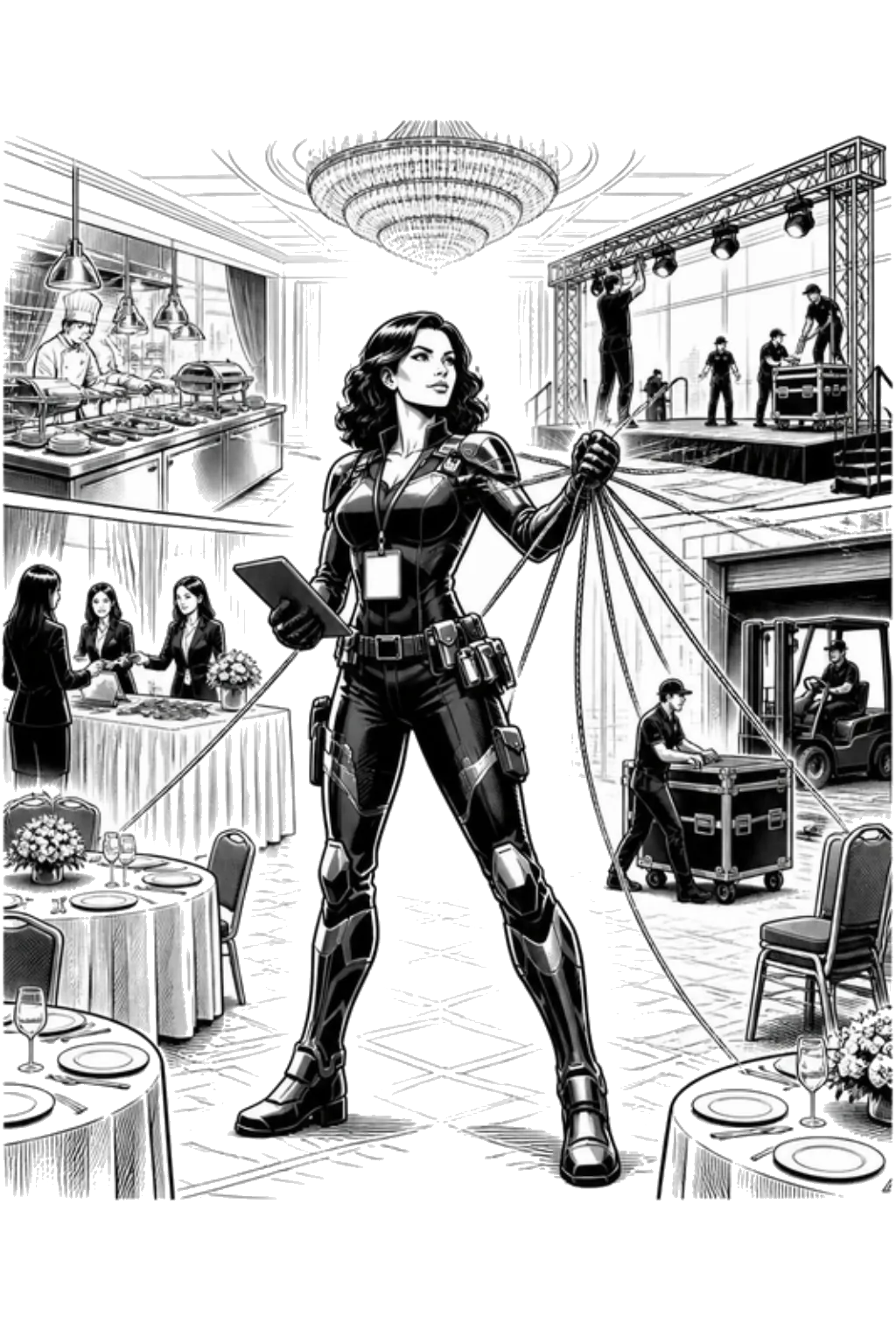
The event is one set of facts: who, where, when, how many, at what price. The tools hold them in four places, and the planner is the only thing keeping the four in step. Here is where that gives.
01
90 days out · The specs
A budget workbook, a specs workbook and a Word doc for the venue, each with its own version number. A count changes on a call and is re-keyed in all three. Or in two, and nobody notices which.
“We end up having a spreadsheet for our budget and then building a new spreadsheet for our specs.”
02
Guarantee week · The BEO packet
Dozens of BEOs come back with the venue’s numbers and the venue’s wording. Cross-referencing them against your sheet is the weekend before guarantees, and you sign all of them anyway, because the clock does not wait for the match.
“Right before show, before guarantees, it’s: does my BEO match your BEO?”
03
Load-in · The floor
A change at the desk reaches the floor when someone walks it there. The electrical nobody saw gets discovered in the room. The staff reference is a short book with phone numbers, and it was true when it was printed.
“I’m in the room and suddenly I’m told, hey, we were supposed to have electrical at all the tables.”
04
Six weeks after · The bills
Each major bill is recoded by hand against a number that lived in another workbook. Finals arrive for months. Next year’s budget is seeded from memory and last year’s spreadsheet, and the cycle starts again.
“All 26 hotels sent me a PDF of our invoice. Not helpful.”
What one record changes
One record, many views
The function sheet, the BEO line, the budget, the agenda and the phone onsite all read the same record. Change the count or the room and every view follows. Nothing is re-keyed.
The money assembles itself
Menus, sets, labour, service charges and tax are priced on the function. Areas and cost centers roll up while you build, with estimate, actual and variance side by side instead of in three tabs.
The venue’s version and yours
Event Builder reads a BEO packet onto the board, and the signed version attaches to the function it belongs to. The cross-check happens against one list, not two workbooks and a weekend.
Closing seeds the next one
Final invoices sit beside the original estimates, by area and cost center. Export it for finance, and next year starts from a record instead of a memory.
Try it on one function
Thursday’s gala is one record. The sheet, the BEO line, the budget and the phone on the floor are four views of it. Nothing below is re-keyed.
Function sheet
BEO · Cascade Ridge Banquets
| Gala Dinner, three-course plated | 620 × $135 |
| Wine service with dinner | 620 × $28 |
| Order total | $101,060 |
Room on the order: Aspenglow Ballroom
Budget · Food & Beverage
Rolls up to the F&B area and the event total.
Onsite · Maya’s phone
Aspenglow Ballroom · 7:00 PM
Guaranteed
620
Rounds
62
Show week
Onsite, the same record is on every phone. The board shows what is done, what is next and who owns it, and a change at the desk reaches the floor as it happens. Print the day’s sheets if you still want paper in your hand.
Where each tool stops
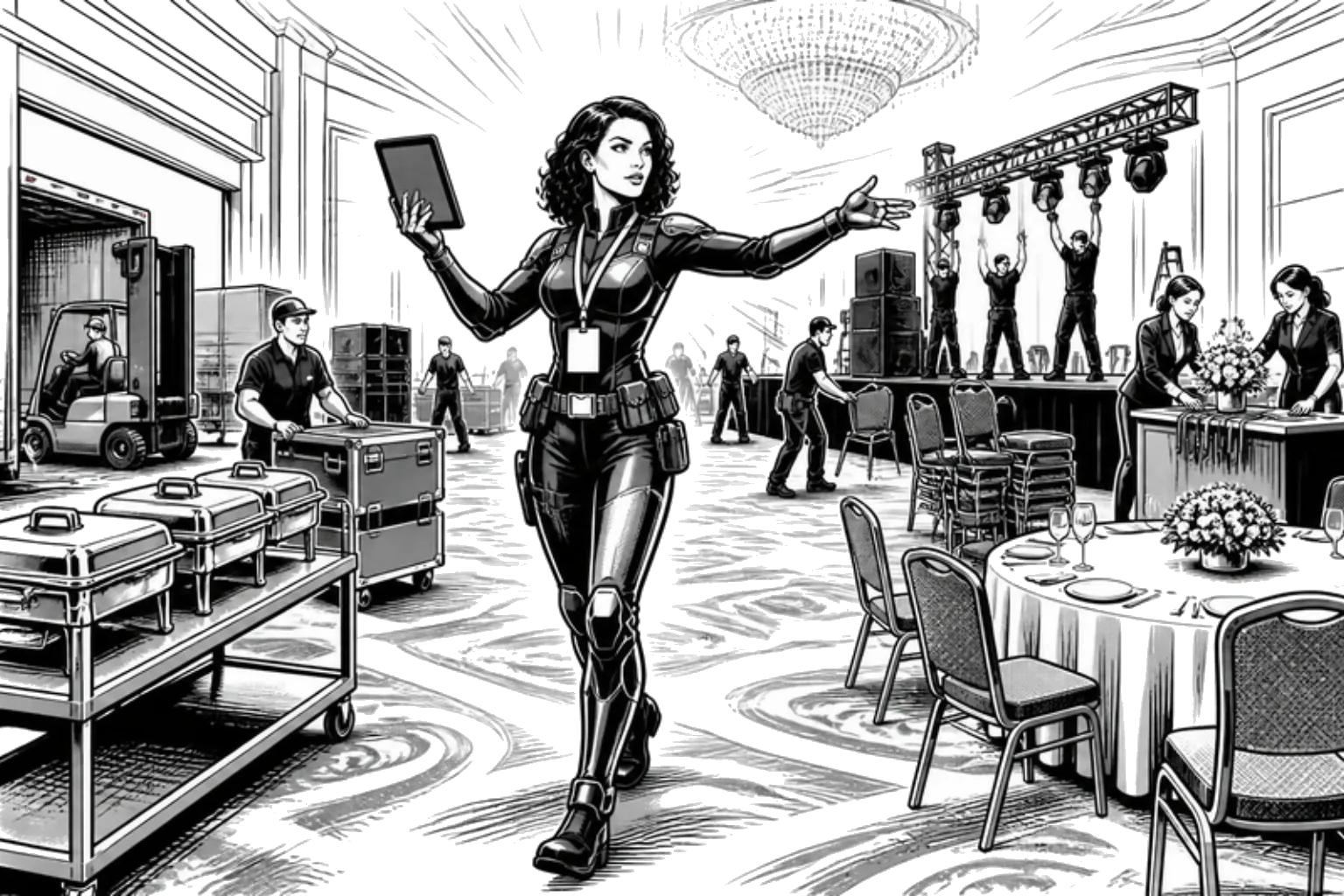
Planners did not choose these tools by accident. Each one is good at its job. The gap is the job none of them was built for, and it has been filled by the planner.
Built for
Anything, by you, fast. It bends to the event and it is honest about what it holds.
Where it stops
It holds one person’s version. The budget tab and the specs tab do not know about each other, a changed count is re-keyed by hand, and the latest copy lives in someone’s inbox.
Beside Pholeo
It becomes the export. The record is shared and the spreadsheet is a view of it you can still download, in your layout, for finance.
Built for
Attendees, sessions, badges and the revenue coming in. The front door of the event.
Where it stops
At the door. It knows who is coming. It does not know how the room is set, what the kitchen is plating, where the AV bill lands or whether two committees want the same room at four.
Beside Pholeo
It stays. Pholeo sits behind registration, where the logistics live once the event has to be produced.
Built for
Tasks, owners and due dates, for any project. Good at the list.
Where it stops
It tracks that the BEO is due, not what is on it. It has no idea what a guarantee is, where a service charge goes or which function a task belongs to.
Beside Pholeo
Planning tasks live beside the functions they are about, authored relative to the event date so a moved show moves the plan.
Built for
The venue’s own kitchen, banquets and billing. It is their record of your event.
Where it stops
It is their version, in their template, signed onsite. Matching it to your specs is a manual cross-reference, and the corrections go back as emails.
Beside Pholeo
It is read onto your board and attached to the function it describes, so the comparison is against one list and the signed copy is where the specs are.
Built for
Holding the plan in your hand when the Wi-Fi is bad and the room is loud.
Where it stops
It was true when it was printed. The 4 p.m. change is on the desk, not in the book, and the short book of phone numbers is wherever it was left.
Beside Pholeo
The same record is on every phone through Pholeo Onsite, and the day sheets still print for anyone who wants the book.
Nothing above is a product name on purpose. Whatever your registration platform or tracker is called, it keeps its job.
Why planners choose it
Pholeo was made by people who have carried the binder, signed the BEO packet and reconciled the bills. Every screen starts from how the work is actually done, not from a template of it.
The first board is built on a Spec Sync from one of your own BEOs or function sheets, in the session. The first thing you see is your event, in your words, not a sample.
Registration, the attendee app, the venue’s template and the Excel export for finance all stay. Pholeo is the layer underneath them, not a replacement for everything.
Most tools stop when the event starts. This one carries the same record from the first spec to the final invoice, and hands next year a record to start from.
A Spec Sync builds your first board from one real BEO or function sheet.
In their words
“Pholeo allows my team to plan together, no more worrying about breaking a formula and spending hours trying to fix the budget spreadsheet.”
Regina Panza
F&B Lead
Workday Rising
“Working with the Pholeo team to execute an event is like having a co-planner at your side. The additional services ensure that my event is show-ready ahead of schedule.”
Lee Avery, CMP
Independent event planner
On the service behind the software

Case study · ASIS GSX
“It’s faster. It’s more accurate. And I don’t have to chase the details anymore.”
ASIS International moved GSX’s specs, budget and reconciliation into Pholeo, and ran the show onsite without binders for the first time in fifteen years.
Lauren Koleszar, CMP
Meetings Manager, ASIS International

Case study · URMIA
“For 25 years I was stuck translating spreadsheets and mail merges into something venues could understand. Pholeo changed that.”
A lean association team centralized its logistics in Pholeo, cut the Excel and PDF version confusion, and cleaned up the venue conversation without adding staff.
Jack Voorhees
Senior Director of Events, URMIA
FAQ
Straight answers. If yours is not here, ask it on the Spec Sync.
No. Registration, the attendee app and the website stay exactly as they are. Pholeo sits behind them, where the specs, the rooms, the money and the show floor live once the event has to be produced.
No. The budget, the specs and the reconciliation export to Excel in the layout finance expects. What changes is that the workbook is a view of a shared record rather than the record itself, so a changed count is not re-keyed in three files.
They are the starting point. A Spec Sync builds your first board from one of your real BEOs or function sheets, and Event Builder reads a BEO packet onto the board so you do not key it in.
Yes. The venue keeps its template. Their BEOs are read onto your board and the signed versions attach to the functions they describe, so the cross-check before guarantees is against one list.
Association conference teams first, then corporate event teams, agencies and independent planners. The common thread is an event with real F&B, room and budget complexity run by a team smaller than the work.
Per conference, in three packages that differ by how much of the Pholeo team you get alongside the software. The pricing page has the detail, and the Spec Sync is where we say which fits.
Keep exploring
Share one spec and we will build your first board with you.