Pholeo

$ reports --one-field-catalog --every-layout

“I sent her the spreadsheet of all the activities, and it takes six weeks for her to go through it.”

An association program director, on a custom demo

Function sheets, BEO-ready prints, grids for the AV house and custom reports, all generated from one field catalog over the live record. Build a report once, run it whenever someone asks, print it when someone needs paper.

spec sync · transcript

  1. ›All those different reports and spreadsheets to the different vendors.
  2. ›I can’t report out of a Word document.
  3. ›We report that into the uber budget through our budget manager.
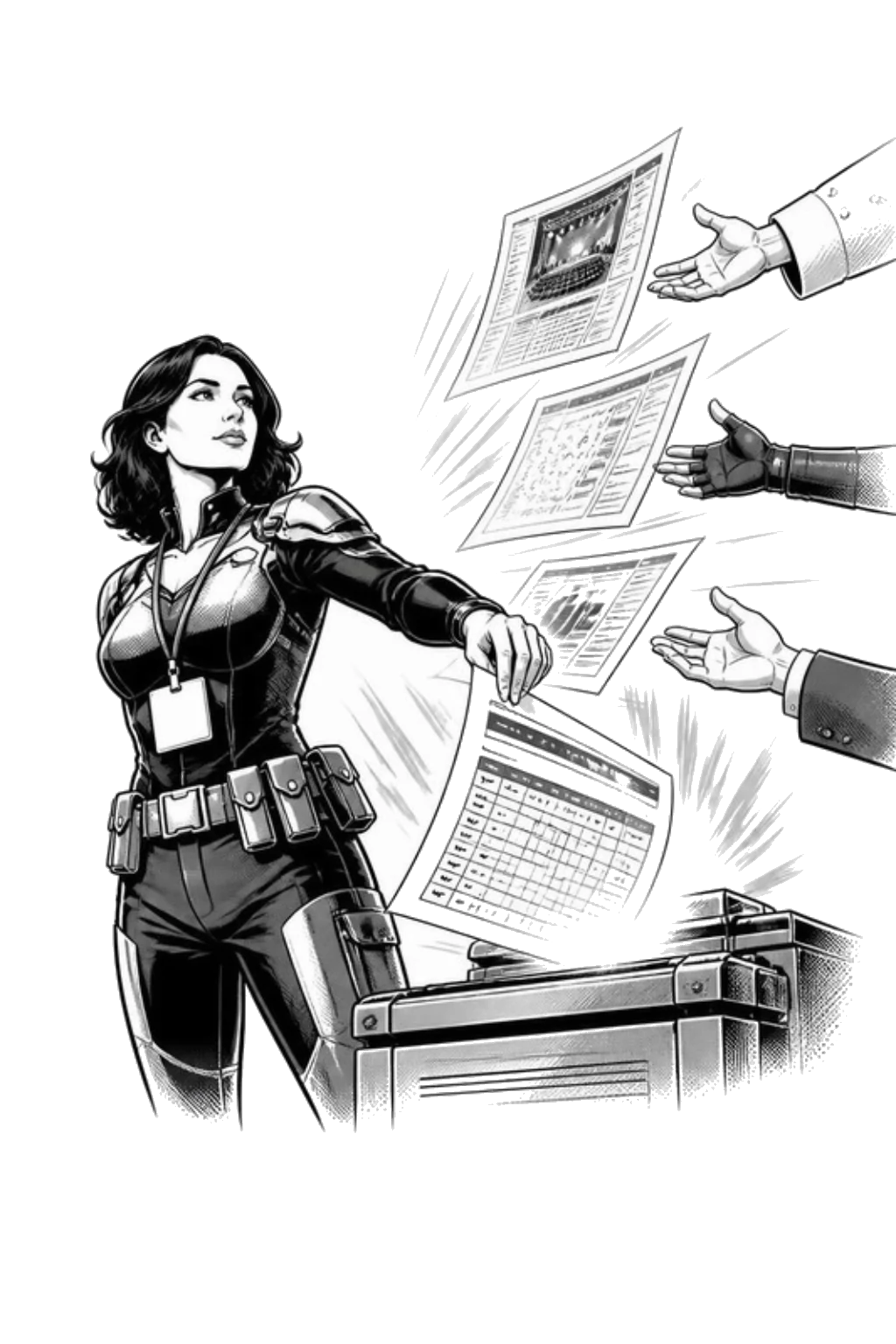
A planner pulls finished reports and function sheets from a printer and hands one to each of three outstretched hands.
  1. 01/ Reports
  2. 02/ Builder
  3. 03/ Print
  4. 04/ The sheet

Outputs are views, not files

One catalog of fields. The venue, the AV house and the board each get their layout.

  1. 01

    The field catalog

    Every field on a function, available to every report.

    Rooms, sets, counts, menus, AV, budget lines, revenue, owners and statuses are one catalog. A report is a choice of fields, filters and grouping over it, saved and rerun.

  2. 02

    Prints

    Function sheets and BEO-style pages, formatted for paper.

    Print reports are built for the venue walk and the kitchen door: page per function, the fields that matter, the logo at the top. Print on demand; the record stays live.

  3. 03

    Exports

    Excel and CSV, grouped the way finance asked.

    Group by cost center or GL code, by vendor, by day. The export is the report, so the sheet you send to accounting is the one you looked at.

  4. 04

    Dashboards

    KPIs, service and label widgets, filtered live.

    The dashboard reads the same numbers the reports do. Filter by area, stage or label and the widgets follow, for the weekly check-in or the board slide.

See it on your own spec

A Spec Sync builds your first board from one real BEO or function sheet.

“It’s faster. It’s more accurate. And I don’t have to chase the details anymore.”
Lauren Koleszar, CMP

Lauren Koleszar, CMP

Meetings Manager, ASIS International

Jack Voorhees

Case study · URMIA

“For 25 years I was stuck translating spreadsheets and mail merges into something venues could understand. Pholeo changed that.”

A lean association team centralized its logistics in Pholeo, cut the Excel and PDF version confusion, and cleaned up the venue conversation without adding staff.

Jack Voorhees

Senior Director of Events, URMIA

Read the story

FAQ

Questions planners ask about reports & prints.

Straight answers. If yours is not here, ask it on the Spec Sync.

What is the difference between a report and a print?

A report is a table over the catalog: pick fields, filter, group, export. A print is a page layout for paper or PDF, built for the venue walk and the kitchen. Both read the same live record.

Can I build a report once and reuse it?

Yes. Saved reports live with the event and come along when the event is duplicated, so next year’s vendor grid is a click.

Can the venue get a BEO-style document?

Yes. BEO-ready prints come out in the layout a hotel expects, generated from the functions, with service charge and tax shown the way the hotel will bill.

How do I get numbers to finance?

Export the report grouped by cost center or GL code to Excel or CSV. Reconciliation reads the same lines, so the export and the close-out agree.

Does the dashboard update on its own?

Yes. A count changed on the board, a menu swapped on a function or a record moved to booked shows in the widgets without a refresh, for everyone who can see it.

Can a report include revenue?

Yes. Revenue fields are in the catalog, so a report can put booked and pipeline revenue beside the spend for the same functions.

Bring the event out of your head.

Share one spec and we will build your first board with you.