Pholeo

$ event-builder --documents-in --board-out

“Those all have to get entered by hand. There’s no way to pull that in.”

A content manager, on a Spec Sync call

Hand Event Builder the venue contract, the BEO packet or the menus. It reads them into a draft board you review line by line, with every value quoting the page it came from. Nothing is written to the event until you say so.

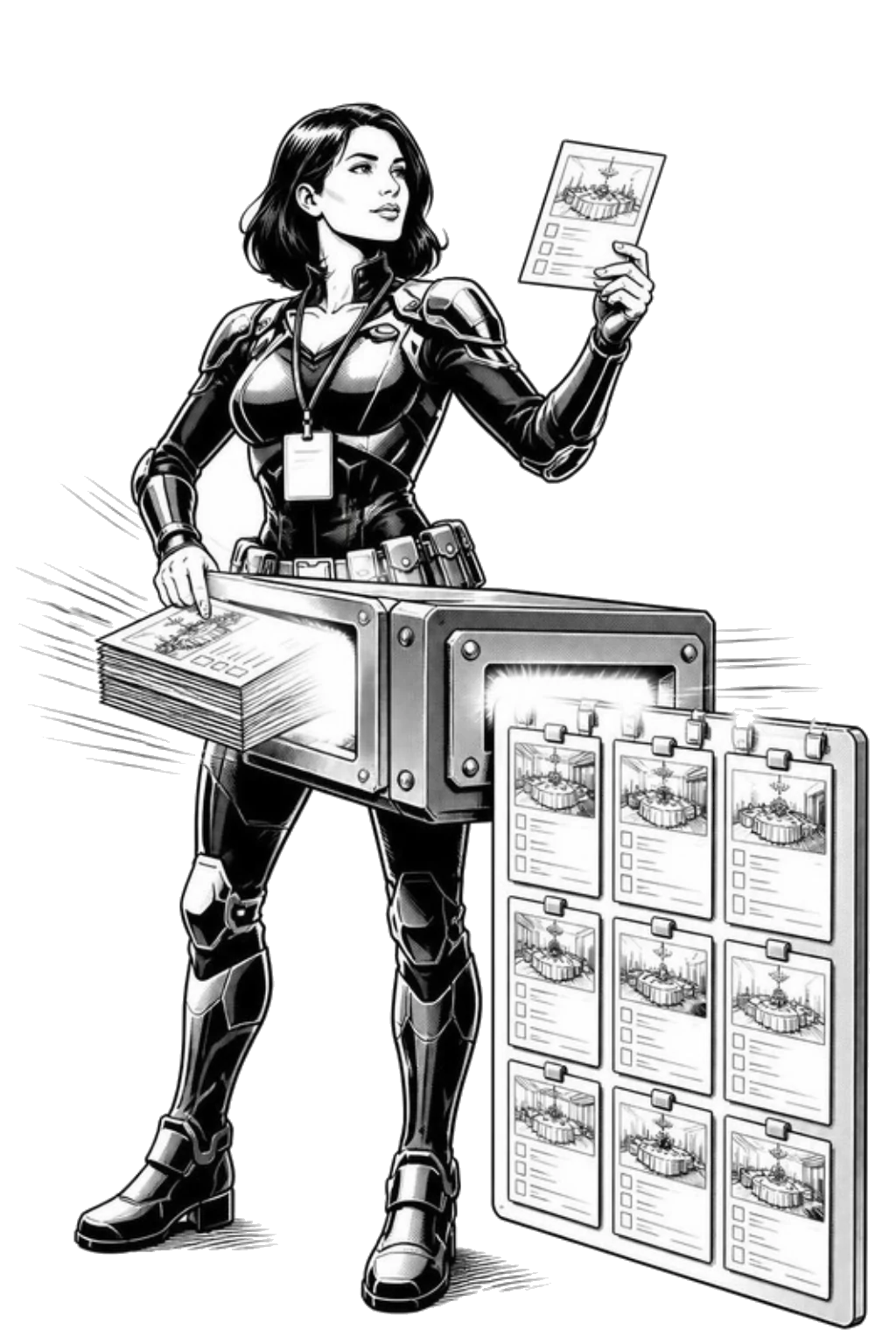
A planner feeds a venue packet into a machine that prints it out as a neat grid of cards, each one a function on the board.
  • “Did you have to manually load the whole F&B master? Break it down by tab?”
  • “Are you able to start with an Excel and upload it?”
  • “I have a Word doc and an Excel sheet. It’s really just a skeleton for right now.”
  1. 01/ Start
  2. 02/ Build
  3. 03/ The board
  4. 04/ One function

It reads. It never decides.

The document becomes a draft. You decide what stands, one row at a time.

  1. 01

    Documents in

    The contract, the BEO packet, the menus, the prior year’s board.

    Event Builder reads what the venue sent and what you already have. A revised BEO changes only the functions it names; a prior conference becomes a ranked source, not a copy.

  2. 02

    Every value quotes its page

    A count, a room or a price shows where it came from.

    Each imported fact points at the page and the line it was read from, and a value that cannot be verified against the document is rejected with a reason, never kept quietly.

  3. 03

    Planner outranks document

    When the packet and the planner disagree, it asks.

    The authority order is yours. A conflict between a signed contract and what you told it is a question on screen, not a silent default.

  4. 04

    One commit, or none

    The board is created in one step, or not at all.

    Rooms, functions, menus and budget lines land together. A step that fails leaves no half-built event behind. Build more later and it adds to what you have rather than starting over.

See it on your own spec

A Spec Sync builds your first board from one real BEO or function sheet.

“It’s faster. It’s more accurate. And I don’t have to chase the details anymore.”
Lauren Koleszar, CMP

Lauren Koleszar, CMP

Meetings Manager, ASIS International

Jack Voorhees

Case study · URMIA

“For 25 years I was stuck translating spreadsheets and mail merges into something venues could understand. Pholeo changed that.”

A lean association team centralized its logistics in Pholeo, cut the Excel and PDF version confusion, and cleaned up the venue conversation without adding staff.

Jack Voorhees

Senior Director of Events, URMIA

Read the story

FAQ

Questions planners ask about event builder.

Straight answers. If yours is not here, ask it on the Spec Sync.

What can Event Builder read?

Venue contracts, BEO and MEO packets, catering menus, function books and the master workbook you already keep. Scanned PDFs are read too. It also reads a prior pholeo, so this year starts from last year’s board with this year’s documents on top.

Does it change my event without asking?

No. It produces a draft you review. Every row is accept, change or reject, and nothing is written until you commit. The model reads and proposes wording and estimates; the rules build the plan and it cannot add, move or delete a row on its own.

How do I know a number is right?

Each value shows the page and the line it was read from, and you can open the document beside it. A value that cannot be matched to the text is flagged with a reason rather than filled in.

What if I have nothing to upload yet?

Build it step by step. The same wizard walks the venue, the dates, the rooms and the suppliers and builds the board when you are ready.

Can I add to an event that already exists?

Yes. Build more takes a new packet against the board you have, changes only the functions the packet names, and never deletes anything. The board is re-read at apply time so a row you added meanwhile is not created twice.

Is my document sent anywhere?

It is read inside Pholeo and never leaves as a file. Hidden spans are stripped before reading and metadata is never opened. The read has ceilings on pages and cost per run, and a document that cannot be read cleanly is refused rather than guessed at.

Bring the event out of your head.

Share one spec and we will build your first board with you.