Pholeo

$ space --rooms-hours-holds

“It doesn’t have what happens at what time in this room. Connecting those is in my head.”

A conference planner, on a demo

Every room, every hour, every hold, on one wall. The room is a field on the function, so a change here is a change on the sheet, the agenda and the phone onsite.

spec sync · transcript

  1. ›Our team relies heavily on Excel for space allocation. At what time this room needs to flip, who’s using it for what.
  2. ›I have 30 committees assigning to spaces. Can it say: no, you’ve already got something in that room?
  3. ›We have an Excel document that’s basically just, you can see when a room’s available or not.
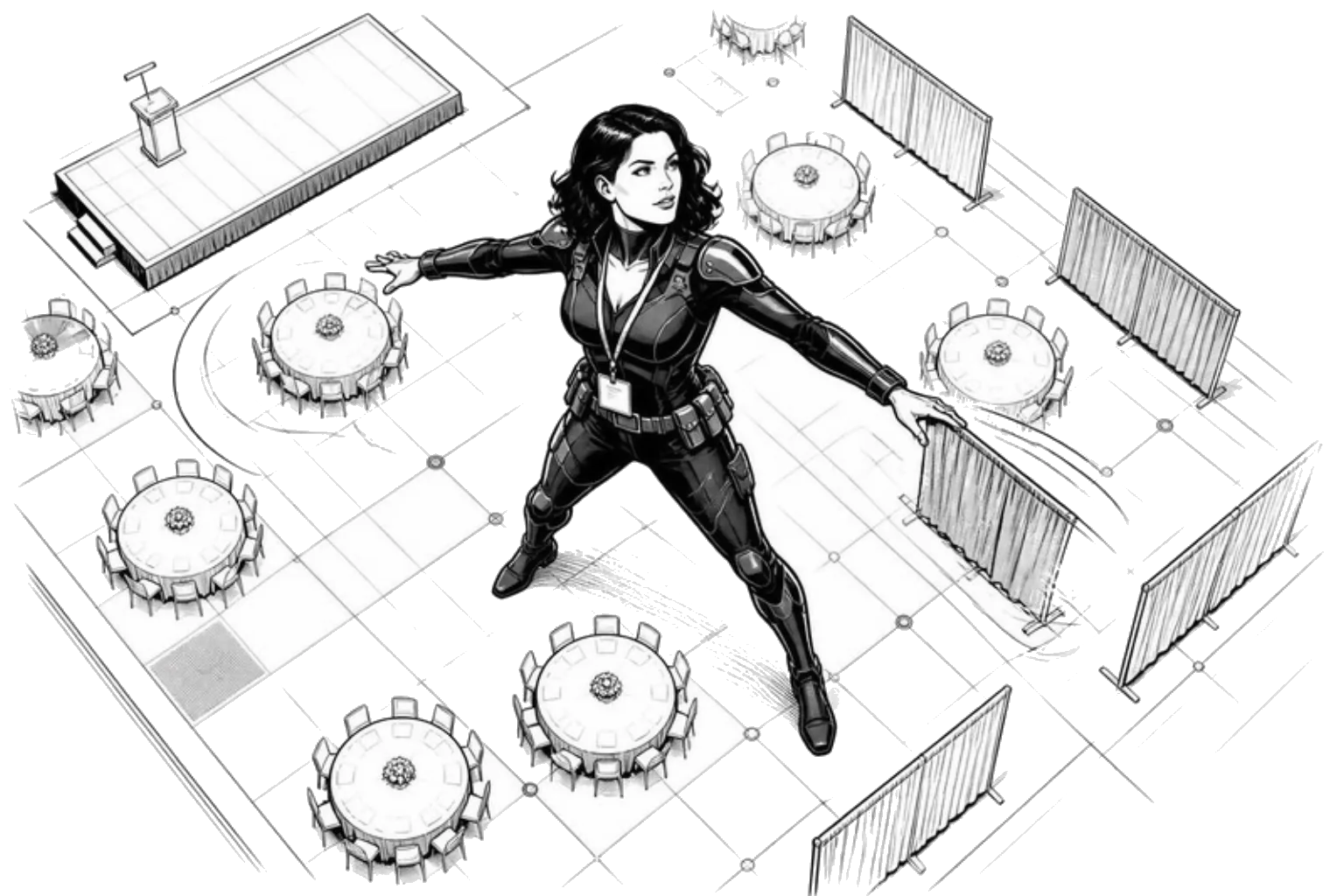
Seen from above, a planner stands on a giant ballroom floor plan like a chessboard, sliding round tables, stage risers and room dividers into place.
  1. 01/ Space
  2. 02/ The set
  3. 03/ Board
  4. 04/ Agenda

The program against the venue

Every room, every hour, every hold, on one wall that the sheet and the agenda agree with.

  1. 01

    Rooms across days

    A grid of rooms and hours for the whole program.

    See the ballroom turn from theater to rounds between sessions, the holds you have not confirmed, and the gaps that could take a late-added meeting.

  2. 02

    Holds and tiers

    Held, provisioned, released. Nothing ambiguous.

    A hold is a hold, not a status-less card on the board. Space tracks what you have asked for, what the venue has confirmed and what you have given back.

  3. 03

    Sets and capacities

    Set type, capacity and conflicts on the function.

    Theater for 600, rounds of 10 for 400. Capacity and set live with the function, so the function sheet and the space plan agree.

  4. 04

    Conflicts you can see

    Two things in one room at one time show up before the venue tells you.

    The grid is the program against the venue. When two functions want the same room at two o’clock, they overlap on the wall, not onsite.

See it on your own spec

A Spec Sync builds your first board from one real BEO or function sheet.

“It’s faster. It’s more accurate. And I don’t have to chase the details anymore.”
Lauren Koleszar, CMP

Lauren Koleszar, CMP

Meetings Manager, ASIS International

Jack Voorhees

Case study · URMIA

“For 25 years I was stuck translating spreadsheets and mail merges into something venues could understand. Pholeo changed that.”

A lean association team centralized its logistics in Pholeo, cut the Excel and PDF version confusion, and cleaned up the venue conversation without adding staff.

Jack Voorhees

Senior Director of Events, URMIA

Read the story

FAQ

Questions planners ask about space allocation.

Straight answers. If yours is not here, ask it on the Spec Sync.

What is space allocation in Pholeo?

Assigning the venue’s rooms to functions by hour across the program, with holds, sets and capacities on the function itself, so the space plan, the function sheet and the agenda read the same room.

Does it warn about conflicts?

Two functions in one room at the same time overlap on the grid, visibly. A hold with no status is kept separate from a confirmed function so the two never look alike.

Can I track holds with the venue?

Yes. A hold is held, provisioned or released, and the grid shows which rooms you have asked for, which the venue has confirmed and which you have given back.

How are room flips handled?

Sequential functions in the same room each carry their own set, so the flip from theater to rounds between sessions is visible on the wall and on the sheet.

Can I import my room list?

Rooms, capacities and the functions that use them can be imported from your existing workbook, or built on a Spec Sync from the venue’s floor plan and your specs.

Does it draw floor plans?

No. Pholeo holds the room, the set, the capacity and the time; diagrams and floor plans attach to the function where the crew can open them.

Bring the event out of your head.

Share one spec and we will build your first board with you.