Pholeo

$ planning --phases-and-tasks --days-out

“I keep a separate to-do list of what I need to finish and the due date.”

A conference planner, on a Spec Sync call

Pre-production as phases and tasks, authored relative to the event date rather than the calendar. Move the event and every task moves with it. Eight ways to look at the same plan, and a promote button for the moment a task becomes something that happens onsite.

spec sync · transcript

  1. ›I have a month-by-month production schedule and I’m in the midst of updating it for this year.
  2. ›It’s nice to copy this year’s and save the same timeline for next year.
  3. ›The deadline is probably in the Smartsheet, but she’ll know it off the top of her head.
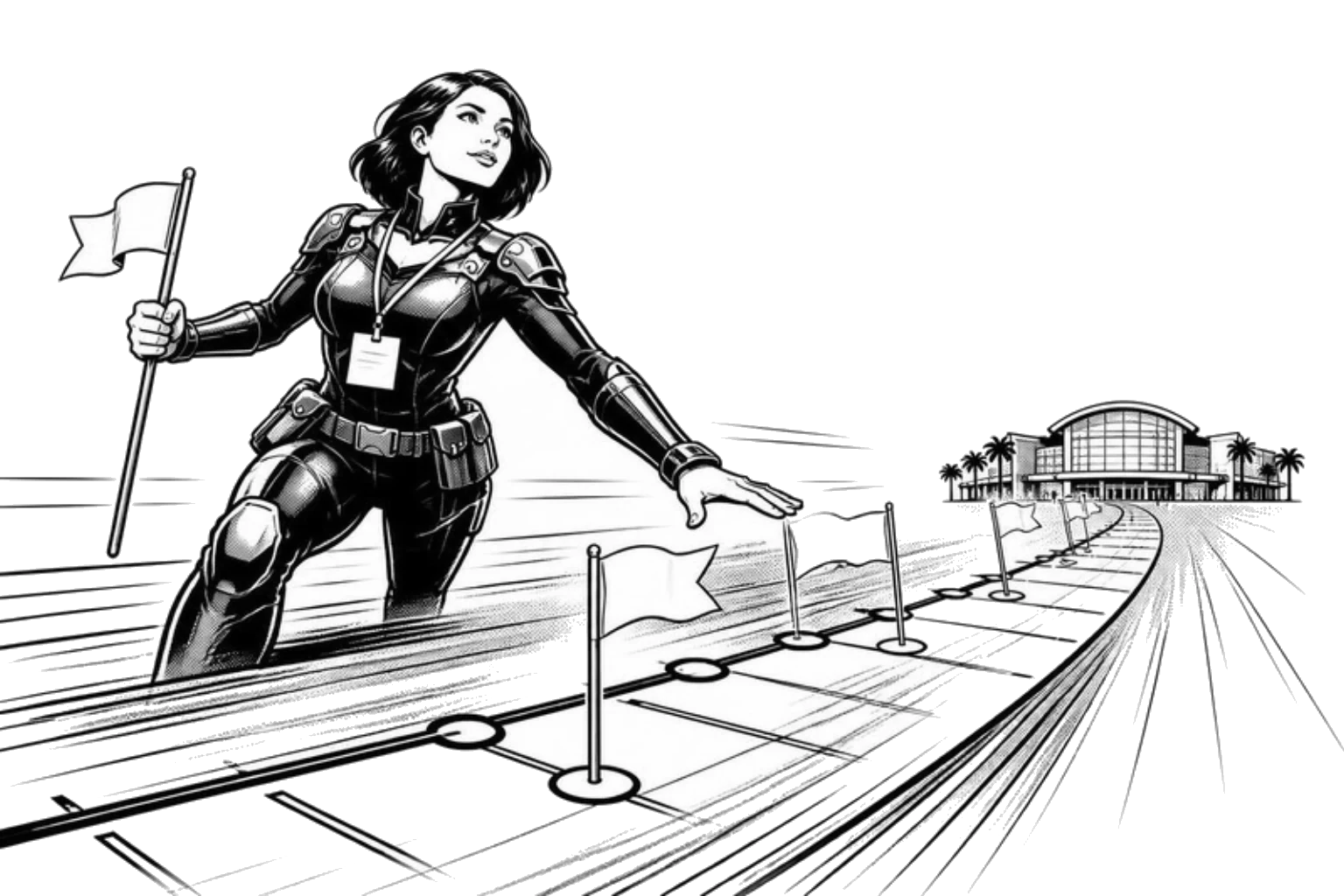
A planner strides along a track of milestone flags toward a convention centre on the horizon, holding one flag high.
  1. 01/ Tasks
  2. 02/ Timeline
  3. 03/ Calendar
  4. 04/ Promoted

Relative to the event, by design

There is no due date column. A task is forty-five days out, and that is the point.

  1. 01

    Days out, not dates

    Author the plan once. Reuse it by changing the event date.

    A task is due at a count of days before the event. Move the event and the plan moves. Next year is this year’s plan with a new date, not a spreadsheet to re-key.

  2. 02

    Phases

    Contracting, build, final weeks, show, close.

    Tasks group by phase so the team sees what season they are in. Statuses are the same ones Production uses, so a planning task and a function speak the same language.

  3. 03

    Eight views

    List, countdown, board, timeline, calendar, workload, my week, table.

    One plan, read the way each person needs it. The board for triage, the timeline for the vendor call, workload for the person who is quietly carrying too much, my week for Monday morning.

  4. 04

    Promote to Production

    A task that becomes a function keeps its history.

    When a site visit becomes a load-in, promote it. The function appears on the board with its link back to the task, so the onsite team can see where it came from.

See it on your own spec

A Spec Sync builds your first board from one real BEO or function sheet.

“By having our team integrated into Pholeo, production schedules build themselves.”

Julia McFarland

Program Lead, Sparks

Jack Voorhees

Case study · URMIA

“For 25 years I was stuck translating spreadsheets and mail merges into something venues could understand. Pholeo changed that.”

A lean association team centralized its logistics in Pholeo, cut the Excel and PDF version confusion, and cleaned up the venue conversation without adding staff.

Jack Voorhees

Senior Director of Events, URMIA

Read the story

FAQ

Questions planners ask about planning.

Straight answers. If yours is not here, ask it on the Spec Sync.

How is Planning different from Production timelines?

Planning is the work before the event: the tasks, who owns them and when they are due relative to the date. Production timelines are the run of show once functions exist. A planning task is promoted into Production when it becomes something that happens onsite.

Why is there no due date field?

Because storing one creates the drift the module exists to prevent. A task is due a number of days before the event; the date is computed. Move the event and nothing is stale.

Can we reuse last year’s plan?

Yes. Duplicate the event and the phases and tasks come with it, re-dated from the new event date. The sixty-day checklist you perfected is the starting point, not a memory.

Who can see what?

Members with the Planning module see the plan; roles decide who can edit. Owners and collaborators are on the task, and workload view shows who is carrying what.

Can tasks carry files?

Yes. Proofs, contracts and site-visit photos attach to the task, and they follow it when it is promoted.

What happens to a deleted task?

It goes to the Trash for 180 days with its attachments and can be restored. Undo is a toast, not a dialog.

Bring the event out of your head.

Share one spec and we will build your first board with you.